
What is a Backhoe and How to Use Backhoe Attachments?
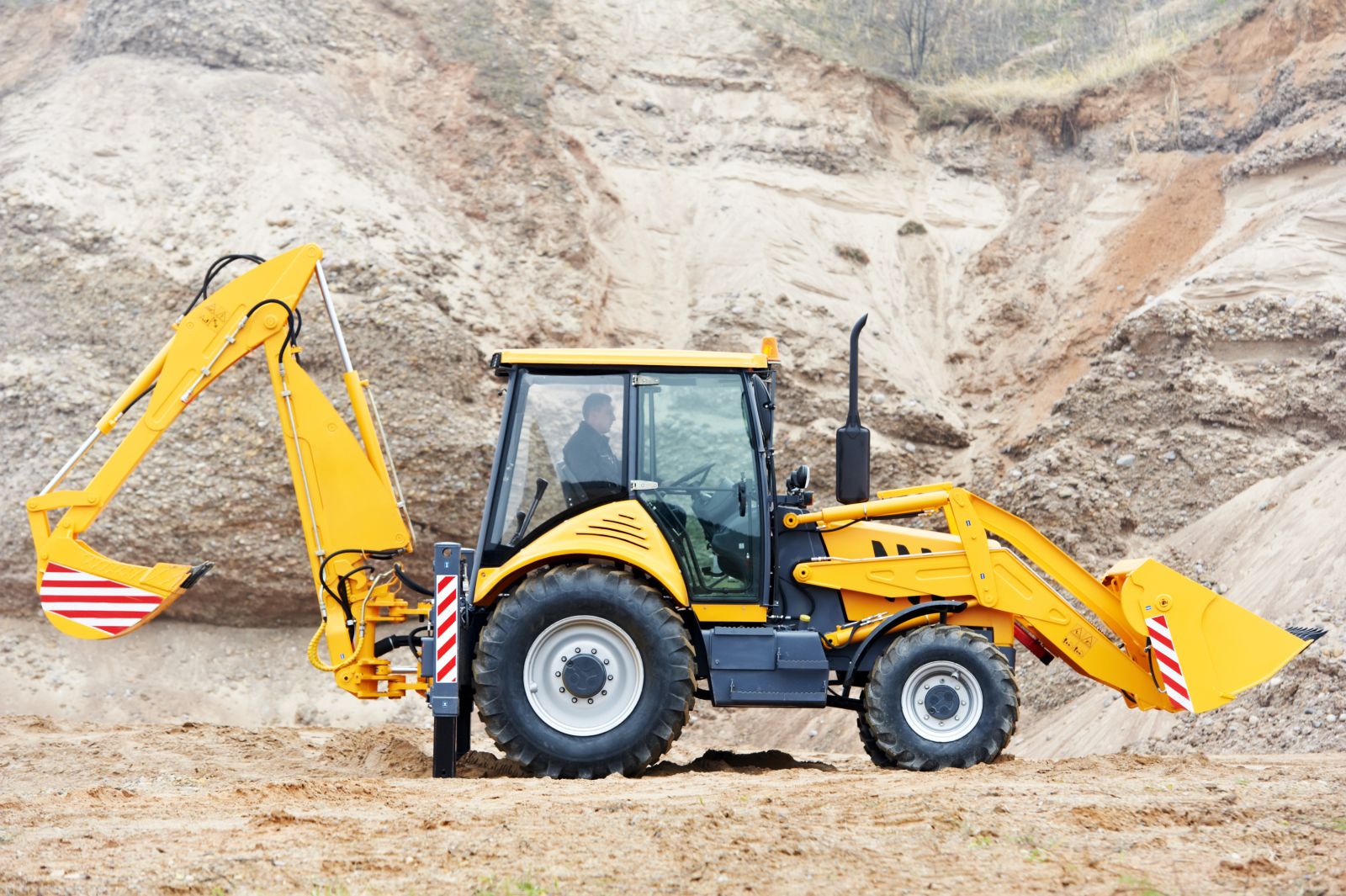
Table of Contents:
- TL;DR
- Backhoe loader vs backhoe attachment
- How is a backhoe attachment built?
- Agriculture and landscaping
- Versatility
- Many sizes of machines
- Great stability
- Digging depth
- Bucket size
- Types of backhoe attachments
- During operation
- After operation
- Have a skid steer or mini skid steer? Get a backhoe attachment!
- Frequently Asked Questions
TL;DR
- A backhoe loader is a tractor-like machine containing a rear digging arm and a front loader, whereas a backhoe attachment is a standalone modular assembly compatible with skid steers and tractors.
- The articulating excavating arm comprises a hydraulic boom and a dipper-stick to facilitate versatile digging, trenching, backfilling, and small demolition projects.
- Key selection parameters for backhoe loaders and attachments include engine horsepower, maximum required digging depth (ranging from 6 to 14 feet), and bucket capacity.
- Strict operational protocolssuch as securing seatbelts, managing slope incline travel, maintaining low bucket heights during movement, and deploying locking stabilizersprevent dynamic tip-over hazards.
Backhoes areone of the most versatile pieces of machineryon the market. Thanks to them the operator candrill, dig, rip, break, plowand perform many more tasks. It is no wonder that on many construction sites we often only see a backhoe (or skid steer with backhoe attachment) instead of a whole fleet of various machines.
But how is it possible that abackhoe is useful in so many applications? How to use it and, most importantly, how to choosethe right backhoe attachment? Read on to uncover the mysteries of a backhoe and find outhow to get many things done using just one piece of equipment.
Read our operator's guide: Selecting a Mini Excavator Guide
Backhoe loader vs backhoe attachment
The use of the term 'backhoe' may at times be confusing. It is because it can refer both tothe type of machine,but it can also mean justa part attached at the back of it. Therefore, before we move any further, let us go through the important definitions below.
A Backhoe loaderis a tractor-like machine that has a backhoe at the rear, a front loader, and a chassis that includes the engine, operator's cab, and other vital components.
A backhoe attachmentis a piece of equipment that can be attached to excavators, skid steers, tractors, and other machines.
Read our full guide: Mini Backhoe Capabilities Guide
How is a backhoe attachment built?
A backhoe attachment is also referred to asa back actor or a rear actor.This type of excavating equipment consists of a digging part on the end of an articulated arm built of two parts:
- Boom - the section that is locatedthe closest to the vehicle;attached to the machine via the king-post (a pivot); this long part of the backhoe arm allows it topivot to the sidesat a range between 180 and 200 degrees as well as lift and lower.
- Dipper-stick(or the dipper), the part that carries the bucket.
Read our operator's guide: How Hydraulic Hammers Work
Backhoe applications
When working on a job site, there are various options you might consider when it comes to the machinery. You can use skid steers, excavators, and tractors. A backhoe is one attachment that can greatlyenhance the work of any type of heavy equipment you use. It is very versatile and can greatlyimprove your machine's manoeuvrability.You canuse it in rough terrainto complete tasks, such as loading, digging, backfilling, trenching, and many more. Backhoe attachments areperfect for construction, landscaping, agricultural, paving projects, etc.Let's see below the examples of the application of backhoe attachments.
Construction
- Breaking up pavement and other types of surfaces
- Small demolition projects
- Transporting material
- Cleanup
Agriculture and landscaping
- Digging trenches or ponds
- Uprooting and digging up trees
- Carrying heavy loads, such as gravel, rocks, dirt, etc.
- Leveling ground for paving roads and parking lots
Read our full guide: Excavator Demolition Attachments
Advantages of using backhoe attachments and loaders
There are many advantages to using backhoe loaders and backhoe attachments. Below, we only list a few of the most important reasons to use them with your project.
Ability to operate on various types of terrain
Backhoe attachments and backhoes can doa great job on rough terrain,including rocky areas.If you decide to purchase the whole machine, you can be sure it will work greaton flat surfacesas well ason inclines.
Versatility
Backhoes havea loader bucket and digging arm, which can be used for many applications. The same goes for the backhoe attachments. You candig, demolish, move materials, use them for breaking asphalt or landscaping, and farming.
Many sizes of machines
If you choose to purchase the backhoe loader you canadjust the size of your machineto the type of jobs you will perform.Compact backhoeswill do perfect work in the case of small projects, whereaslarger-sized machineswill work great with more demanding jobs needingmore digging depth or horsepower.
Great stability
This one applies to backhoe loaders, which are characterized byunmatched stability.It is thanks to stabilizers that do not allow the machine to tip over.
Read our operator's guide: Step-by-Step Yard Leveling
Choosing a backhoe loader - factors to consider
If you decide that a backhoe loader is what you wish to purchase, there are several aspects worth considering whilechoosing the right equipment for your needs.Backhoes can havevarious sizes and can have different horsepower, bucket capacities, and digging depths.Consequently, theirprices also differ. Let us take a closer look atthe factors that influence purchasing a backhoe.
Horsepower
More demanding types of terrain and larger projects will require your machine to beextremely powerful(from 60 hp to even more than 110 hp). For smaller tasks, you can choosea mini backhoe with a horsepower of 20.
Digging depth
The type of machine you should get also depends on thedigging depth you must achieve.Compact backhoesare perfect for digging small depthsbetween 6 and 8 feet down(e.g. uprooting trees). However, if you need to dig deeper, larger machines will allow you to achieveeven 14 feet in depth.
Bucket size
Your backhoe can serve you well as a carrying medium thanks to its bucket.The lifting capacityof a backhoe bucket rangesbetween 5,500 and 8,200 pounds. You can purchase machines with bucket sizesbetween 12 and 36 inches.
Types of backhoe attachments
There are many attachments you can purchase for your loader, which will give you a variety of applications for which you can efficiently use your machine. Let's have a look at a few of the most popular ones.
- Buckets -consist of sharp teeth on the edges that can penetrate various surfaces and scoop up dirt. They are useful fortrenching, grading, lifting and transporting soil, clearing debris.
- Augers -come in various sizes and havethe shape of a corkscrew.They are usedto drill post holes, make holes for planting trees and shrubs, make holes for footings.
- Hammers -perfectfor demolition and breaking up soil, rock, and other hard surfacesas well as inpreparing earth for further work.
- Compactors -they are used forEarth compactionin excavators.
- Snow handlers -perfect attachments forsnow removal in wintertime.The most popular attachments of this type include snow blades, V-blades, blowers, pushers, and angle brooms.
- Rippers -work great withbreaking up solid materials,such as asphalt, ice, frozen ground, or rock, thanks to their large, sharp teeth.
- Couplers -this attachment helps inswitching between attachments quickly,without having to leave the cab of your backhoe.
- Brooms and street sweepers -made of steel or poly bristles thathelp in clearing debris or snow.
Backhoe safety instructions
If you are planning to operate any (especially heavy) machinery, it is of utmost importance tofollow health and safety rules.We will always be the ones to stress thatsafety comes first.Even though modern machines are relatively safe when it comes to damage from flying objects, other dangers also may occur. That is why we give youthe most important safety rules you should follow to stay (and keep others) safewhile operating a backhoe.
Before operation
- Check whether the controls in the cabfunction well
- Buckle inbefore starting the engine
- Do not switch off the backup alarmwhen you first start to navigate the machine
During operation
- Reduce speedwhile in congested areas or when you work in rough terrain to avoid collisions
- Keep the bucket lowwhen you move the backhoe for greater visibility
- Back up into any slopeyou must go through as the backhoes are the heaviest at their rear
- Do not turnon a slope as the machine may tip over
- While using the loaderthe loading surface should be kept smooth and levelotherwise the backhoe may tip over
- Soil piles should be in the proximity of at least three feet from the excavation siteto prevent a cave-in
After operation
- Before shutting the engine down,park your machine on a level surface
- F and R levers should bein a neutral position
- Ensuresetting the parking brake
- Lowering the front attachment to the groundis imperative
- Use a turbo cooldown feature (if your machine has it) tocool down the engine before you shut-off
- Once the machine is turned off,release the pressureby moving the hydraulic levers to make sure the attachments will stay in place
- Lockyour backhoe
Have a skid steer or mini skid steer? Get a backhoe attachment!
Getting a backhoe is a great solution, however, if you own a skid steer or mini skid steer, you can still enjoy the benefits that come from owning a backhoe loader simply byopting for a backhoe attachment.Our units are made ofthe highest quality American steel and hook up to any universal mounted skid steer.
Blue Diamond backhoe attachment we offer is manufactured withthe largest cylinder in the industry.You can order a version with or without a bucket (the sizes range from 9, 12, 18, to 24-inch). If you needa strong but light skid steer attachment, take a look at ourBlue Diamond modelsthat featurea large capacity bucket with great rotation.If you have any questions our friendly and experienced support team is always happy to advise.
Frequently Asked Questions
What is the difference between a backhoe loader and a backhoe attachment?
A backhoe loader is a complete, standalone tractor-like machine that includes a front loader bucket, a rear digging arm, an engine, and an operator's cab. A backhoe attachment is a modular piece of heavy equipment designed to be coupled with other machinery like skid steers, excavators, or tractors.
How deep can a backhoe dig?
The digging depth of a backhoe depends on the size of the machine. Compact backhoe models are designed to dig small depths of 6 to 8 feet down, while larger industrial backhoe machines can achieve a digging depth of up to 14 feet.
What are some common safety procedures to prevent backhoe tip-overs on slopes?
To avoid tip-overs on inclines, operators should always back up any slopes because backhoes are heaviest at the rear. Additionally, operators must keep the bucket low during movement to improve visibility and avoid turning while traveling on a slope.